

Rice Policy and Capacitation for Home-Grown Scaling
Domestic rice faces high competition from imported rice, especially in cities close to seaport, due to relatively high local production cost, variable quality and consumers’ preference.
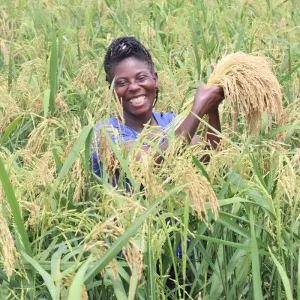
Rice is a staple food for 750 million people in Africa, but the continent is not self-sufficient in rice. Domestic rice faces high competition from imported rice, especially in cities close to seaport, due to relatively high local production cost, variable quality and consumers’ preference.
African governments developed national rice development strategy (NRDS) to double rice production. This resulted in an increase of 10 million tons of paddy rice, but 90% of the production increase was obtained from area expansion, with yields remaining stagnant.
Countries are engaged in their second generation of the NRDS. AfricaRice can accelerate NRDS implementation towards a more sustainable pathway by:
- Capacitating NARS: for co-development of policy options and institutional innovations for adoption of sustainable and competitive rice-based agri-food technologies.
- Tailoring policy options: with and for policy makers, private sector, NARS and other actors to co-creating enabling conditions for local rice competitiveness. Promoting regional policy harmonization for better trade, learning, and technology exchange.
- Creating Investment Opportunities: Developing business models and investment tools to attract private and international funding for rice "bright spots".
Enhancing youth and women entrepreneurship: Building national institutional capacity to support youth/women-led rice-based small- and medium-sized enterprises (SMEs).